Quick Facts
- Not all media you see online is created by someone, some is AI generated.
- Spot fake AI accounts posting spam or disinformation by doing a reverse image search.
- It’s more reliable to get your information from trusted news sources that don’t just rely on AI.
- If you doubt information you see online, fact check it!
Every day when you browse social media you’ll likely come across several forms of AI generated media, whether you’ve searched for it or not. The problems start when you come across posts or media that are specifically designed to be trick or make you believe something that isn’t true.
For example you could see:
- A photo of your favourite celebrity at an event they never attended.
- A video of a politician saying or doing something they didn’t actually do.
- A post designed to look factual when it’s not.
All of the above are typically designed to sway your opinions, get clicks, and spread disinformation or misinformation.
So How Do I Spot AI Media?
Great question! AI has come a long way and is still continuing to improve which means video and image generated content will only get harder to detect. This is why it’s important to get your information from a variety of reliable news sources before sharing it with others.
But there are some tips to spot some of the inaccurate content that’s out there.
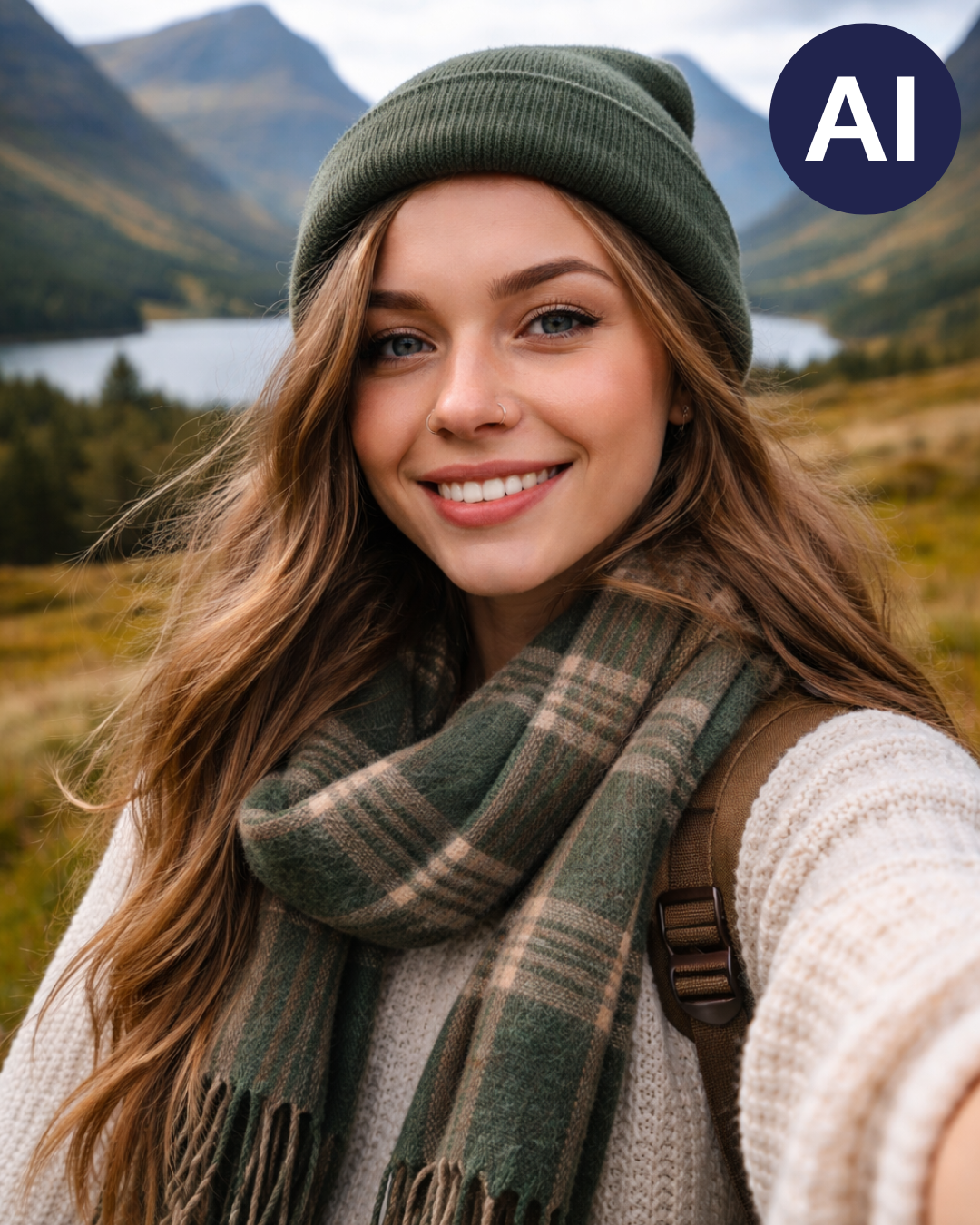
For example, you get a friend request from someone with this profile photo on Instagram. What are the signs for spotting that the image is AI and that as a result, the account is fake.
- The photo is a little too perfect – No one is saying that this isn’t possible with a lot of editing but looking this photogenic (especially outdoors in Scotland!) might raise some questions. Keep an eye on the background too, it takes a lot of skill to frame a photo with perfect scenery like that!
- Reverse Image Search – You can see if an image on someone’s profile shows up anywhere else online by searching it through Google Images or a reverse search engine like TinEye.
- Check their account – Do they have a following? If they don’t have a lot of activity on social media that can be suspicious. On the other hand, if they are posting a lot of same content that can also be unusual. You can also see if they have any more photos that look similarly AI generated and compare.
When it comes to AI videos the same tips can be applied. It’s likely that there will be even more mistakes in AI videos so be on the lookout for things that seem unnatural, especially in the background!
Any More Tips?
You could consider habit stacking. It’s all about attaching a small new habit to something you already do automatically, so the next time you’re looking for information online or scrolling through your socials, simply stack a new step onto that moment and let the habit grow naturally.
For example, it could be as simple as considering if a post you come across includes AI.
Since AI will only continue to improve we strongly recommend that you consider making best use of your skills in fact checking too.
- If you see information you’re unsure is true, check sources and look for the same information in a range of places online.
- Check if the content is labelled as AI. Some social media platforms require content to be marked as AI-generated.
- Improve your fact checking skills further with our article on how to fact check.
Think you can tell the difference a bit better now? Try the BBC Bitesize AI or Real quiz here!
For more information on fact checking head over to our InfoWise page.