
What is the ‘Curriculum’?
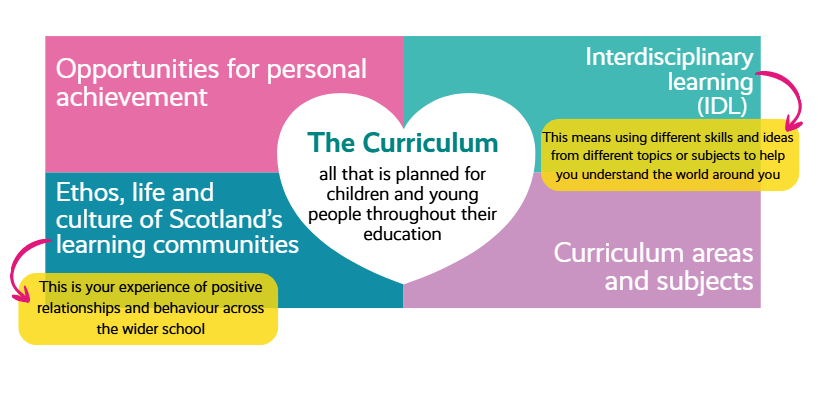
The curriculum is everything that is planned for children and young people throughout your education.
This can be planned for and experienced by learners across:
- Curriculum areas and subjects – these contain the Big Ideas that help you understand the world
- Interdisciplinary learning – This means using different skills and ideas from different topics or subjects to help you understand the world around you.
- Ethos, life and culture of Scotland’s learning communities – your experience of positive relationships and behaviour in your classroom or learning space, playground and across the wider school.
- Opportunities for personal achievement – Recognises diversity of strengths and interests and celebrates achievement across all areas of life
Some young people attend other types of schools such as private schools. These schools do not have to follow the Scottish curriculum.
In Scotland we have a framework, or plan, that helps adults to design a curriculum based on you, your needs and where you live. This is called the ‘Curriculum for Excellence’.
Curriculum for Excellence
The Curriculum for Excellence is the national curriculum used from nursery to secondary school. It has been around since 2010.
The purpose of the Curriculum for Excellence is to help Scotland’s children and young people gain the knowledge, skills and attributes needed for life in 21st century Scotland.
The Curriculum for Excellence includes:
- a broad general education, covering a wide range of subjects up to the end of S3 (third year in secondary school)
- this is followed by a senior phase of learning from S4 to S6 (years 4 to 6 at secondary school).
The main purpose of the Curriculum for Excellence is to help all children and young people to become:
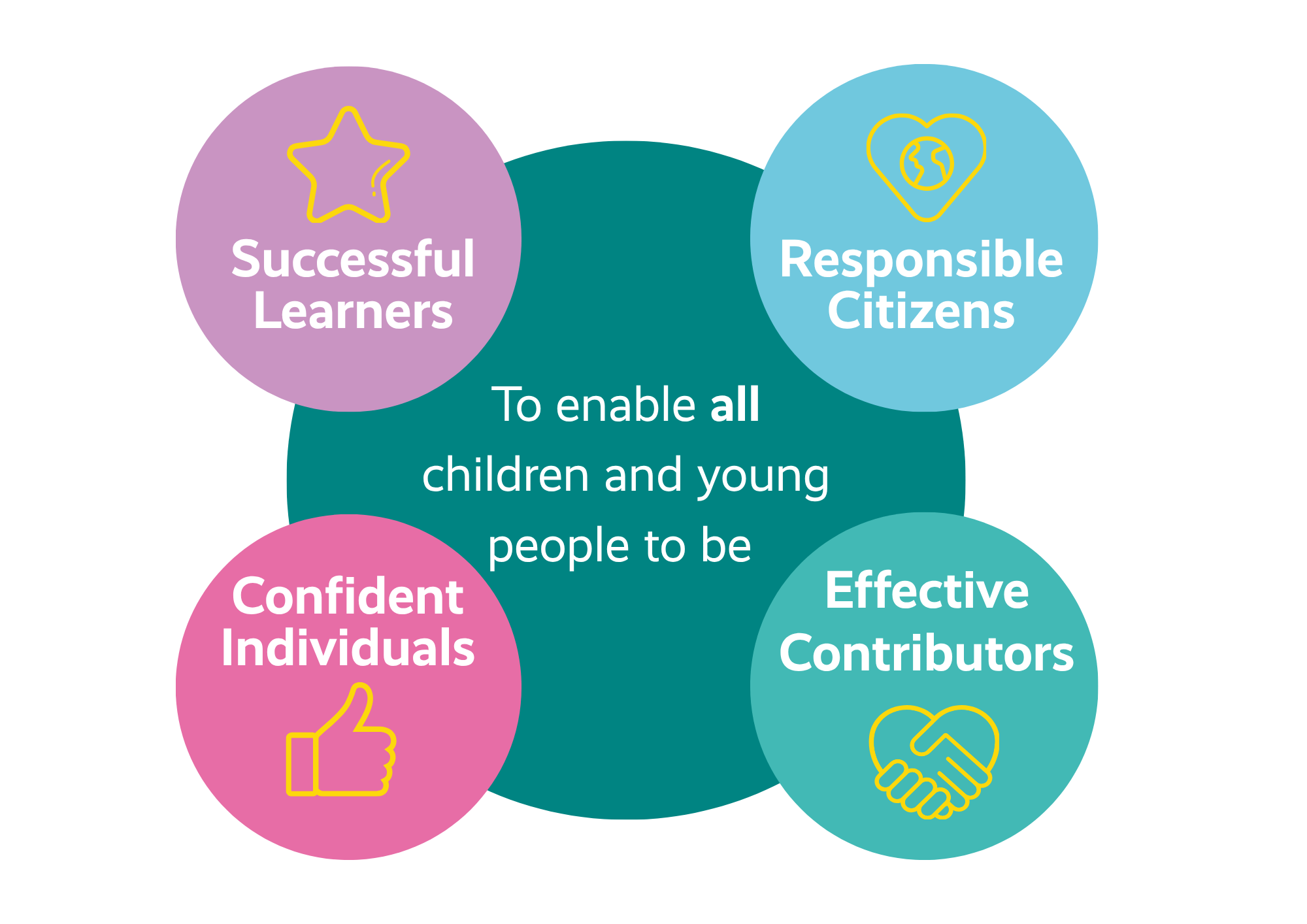
- Successful learners
- Confident individuals
- Responsible citizens
- Effective contributors
As part of your journey as a learner, all children and young people in Scotland have the right to experience a curriculum that makes sense. You are entitled to this from the age of three up until you are 18. This is so you have opportunities to develop the knowledge, skills and characteristics you need to adapt, make informed choices and flourish.
Improvements are being made to the curriculum. You can find out more information about the plans that are in place through work called the Curriculum Improvement Cycle.
The Curriculum is Changing – why?
In 2021 an organisation called the OECD (Organisation for Economic Co-operation and Development) gave a list of recommendations for how Scotland’s Curriculum should evolve to be as good as it can be to support Scotland’s young people to thrive.
There were a number of suggestions made including one to introduce a review process (called a cycle) to look at the current curriculum. This included plans to update the curriculum to make it really clear what knowledge and skills children and young people should build up as you learn, and to understand how you are developing as you do this.
The Children and Young People’s Commissioner Scotland shared a report called “This is our lives, it matters a lot.” Putting children’s rights at the heart of education.
In this report they say that “Change must happen and fast” and that children and young people need to be at the centre of this work as you are the most important participants in the education system.
The Curriculum Improvement Cycle is working to share an education system that is designed to develop every child/young person’s personality, talents and abilities and to make sure children and young people are involved in the process.
What is the Curriculum Improvement Cycle?
The work of the Curriculum Improvement Cycle to improve the curriculum should never stop. Scotland will review and make changes to the curriculum every ten years to make sure it continues to be the best it can be for young people.
A review of Scotland’s Curriculum as a whole will happen once every 10 years. This cycle started in 2023. This means that the process will start again in 2033.
The Curriculum Improvement Cycle process has four stages:
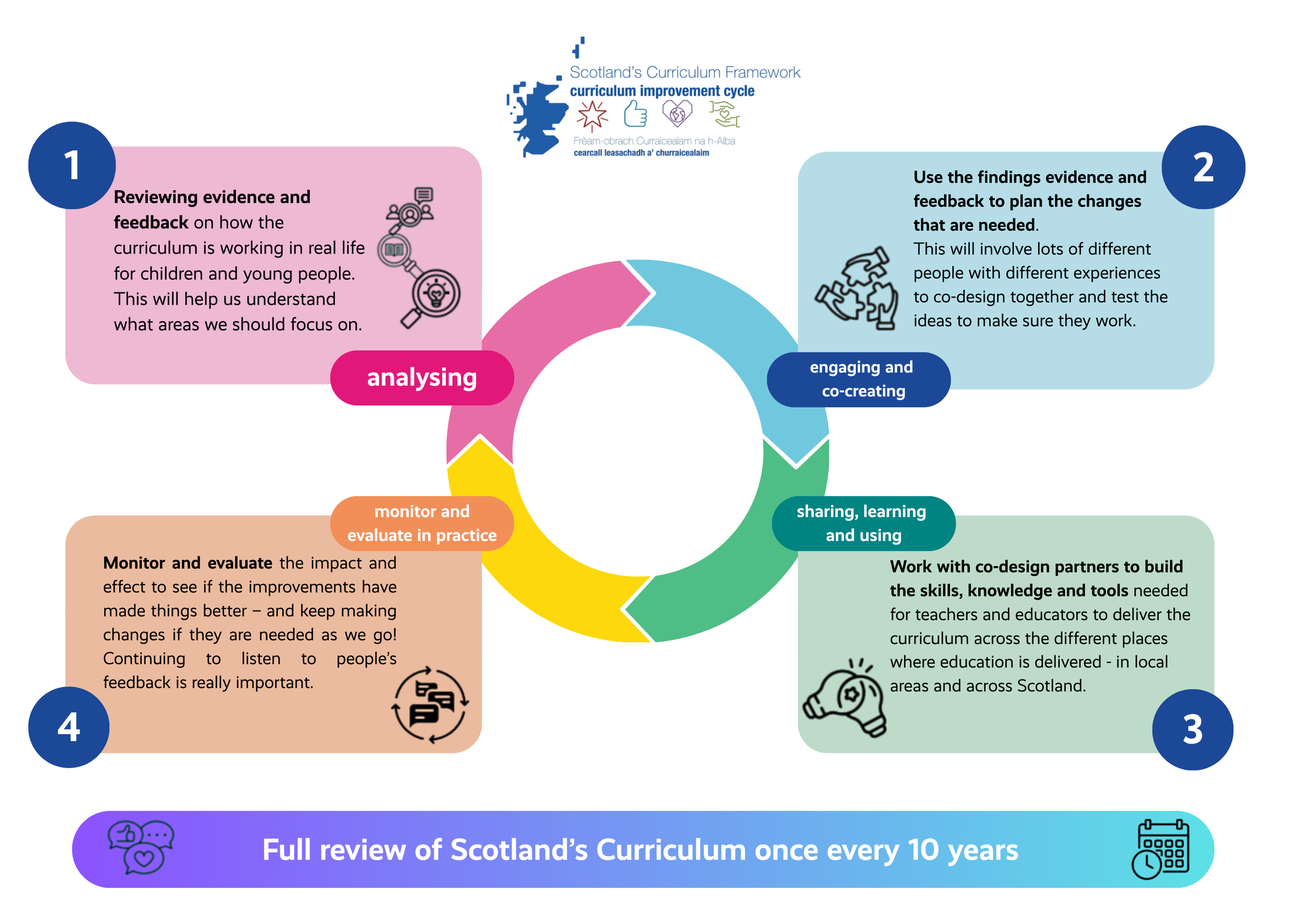
- Analysing: This means reviewing evidence and feedback on how the curriculum is working in real life for children and young people.
- Engaging and co-creating: Use what is learned from the analysis stage (stage 1) to plan the changes that are needed. This will involve lots of different people with different experiences to co-design together and test the ideas to make sure they work.
- Sharing, Learning and Adopting: This means working together to build the skills needed for teachers and educators to deliver the curriculum.
- Mobilising, Monitoring and Evaluating: This means seeing if the improvements have made things better – and keep making changes if they are needed as we go! Listening to people’s feedback is really important at this stage so improvements can keep being made.
Phase 1 (Analysing)
A National Discussion is a nationwide exercise to listen and gather views from lots of different people who are involved in the education system. This includes young people. The purpose is to listen and learn from what people think is important, needs to change or needs to stay the same. It has a focus on putting learners at the centre of the work that is planned.
The last one took place in 2022 and forms part of Phase 1. This included:
- events and discussions in every part of Scotland – led by schools, community groups, local authorities and third sector organisations
- gathering feedback in different ways – including drawings, mindmaps and videos
- receiving more than 5,600 survey and email responses sharing people’s views – over 200 group responses were submitted
- engaging with 26,000 pupils and students through online school assemblies
- engaging with more than 80 people through series of online public events
- engaging with more than 6,000 posts on X (Twitter) about the National Discussion using the hashtag #TalkScottishEducation – in excess of 10 million social media users saw the hashtag!
We are currently in Stage 2 (Engaging and Co-creating).
How have young people been involved?
Lots of people have been involved in stage 2 of the Curriculum Improvement Cycle process.
So far Education Scotland has engaged with over 4000 children and young people as part of the Curriculum Improvement Cycle – and used questionnaires to reach tens of thousands more. They are engaging with children and young people in three different ways:
- Inform – telling children and young people what the Curriculum Improvement Cycle is
- Listen – asking and listening to children and young people’s views on the improvements that need to be made
- Involve – providing opportunities for children and young people to be involved in the process. Young people were involved in co-creating the information you are reading just now!
How inclusive has the process been?
Support for the process includes:
Adults from –
- early learning and childcare
- primary school
- secondary school
- community learning and development
- additional support needs specialists
- specialists from universities
- employers and national organisations
- Scottish Government
All co-design groups (groups working together to design the process) involved in shaping the Curriculum Improvement Cycle have been recruited to ensure representation from people who work with children and young people.
Specific work has taken place to make sure different views and experiences of children and young people from lots of different backgrounds are also included in the Curriculum Improvement Cycle. This includes people who work with children and young people with Additional Support Needs (ASN).
The curriculum will be in both English and Gaelic medium schools in Scotland. Those teaching in Gaelic medium settings are involved in the processes.
What will be different?
The purpose of Scotland’s education system has been the same for years. It is:
To help Scotland’s children and young people gain the knowledge, skills and attributes needed for life in 21st century Scotland.
The purpose isn’t changing.
The Curriculum for Excellence is still going to help all children and young people to be:
- Successful learners
- Confident individuals
- Responsible citizens
- Effective contributors
The things teachers and practitioners use to plan learning for children and young people, will also remain:
- Curriculum areas and subjects – these contain the Big Ideas that help you understand the world
- Interdisciplinary learning
- Ethos, life and culture of Scotland’s learning communities
- Opportunities for personal achievement
The main focus of the current phase of the Curriculum Improvement Cycle is to make changes to documents and supporting materials (called the technical framework). These are used by educators and others who help children and young people in their learning. For example, the planning of learning for children and young people, including their communities and the organisations that support them outside of school.
You might have heard your teachers or educators talk about these by using phrases such as:
- Principles and Practice papers
- the Experiences and Outcomes
- Benchmarks
- Subject / Curriculum Area progression pathways
The improved curriculum will be introduced from August 2028 and replaced by a new one.
It is being co-created by teachers, practitioners, partners, and children and young people. It will:
- make the curriculum clear and easier to understand
- show clear links between what learners know, what they understand, and what they are able to do.
- improve the way your learning fits together from the ages of 3 to 18.
The curriculum approach focuses on helping learners to understand key concepts and ideas, and how to use these, rather than memorising isolated facts and information.
There are Big Ideas for each area of learning that capture the purpose and relevance of them, and help identify what is essential for learners to know. This means what you are expected to know, be able to do, and understand as you progress through your education.
- Know – the information you are expected to know
- Do – the skills, strategies and process you are expected do
- Understand – the big Ideas and general principles you are expected to understand
What is a ‘Big Idea’?
Big Ideas are what children and young people will understand from each area of the curriculum from early years onwards.
The new guidance will set out the big ideas that all children and young people need to help them be individuals, contributors, citizens and learners.
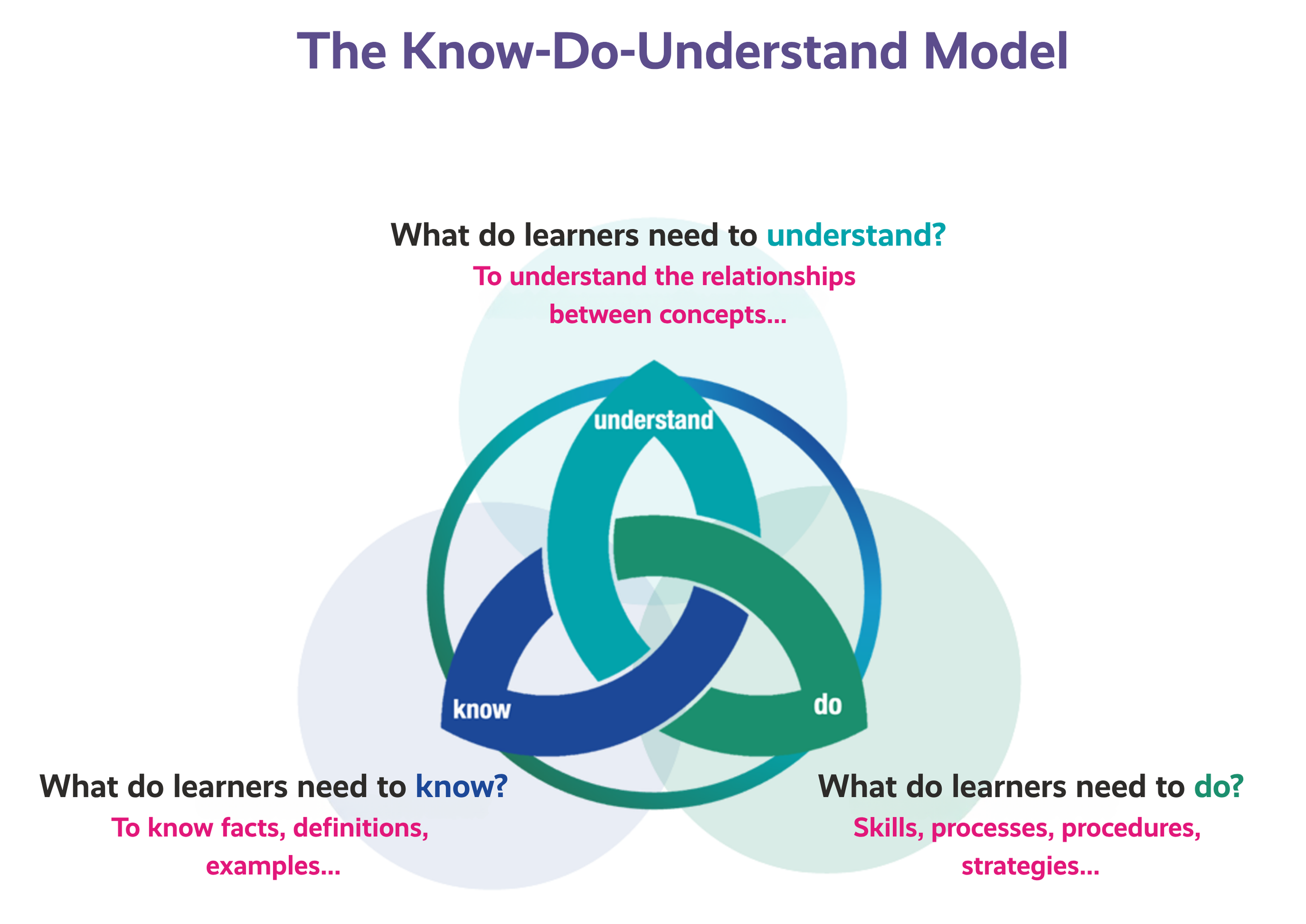
Your teachers/educators will combine the three elements (Know, Do, Understand) in ways they think will support you best in your learning.
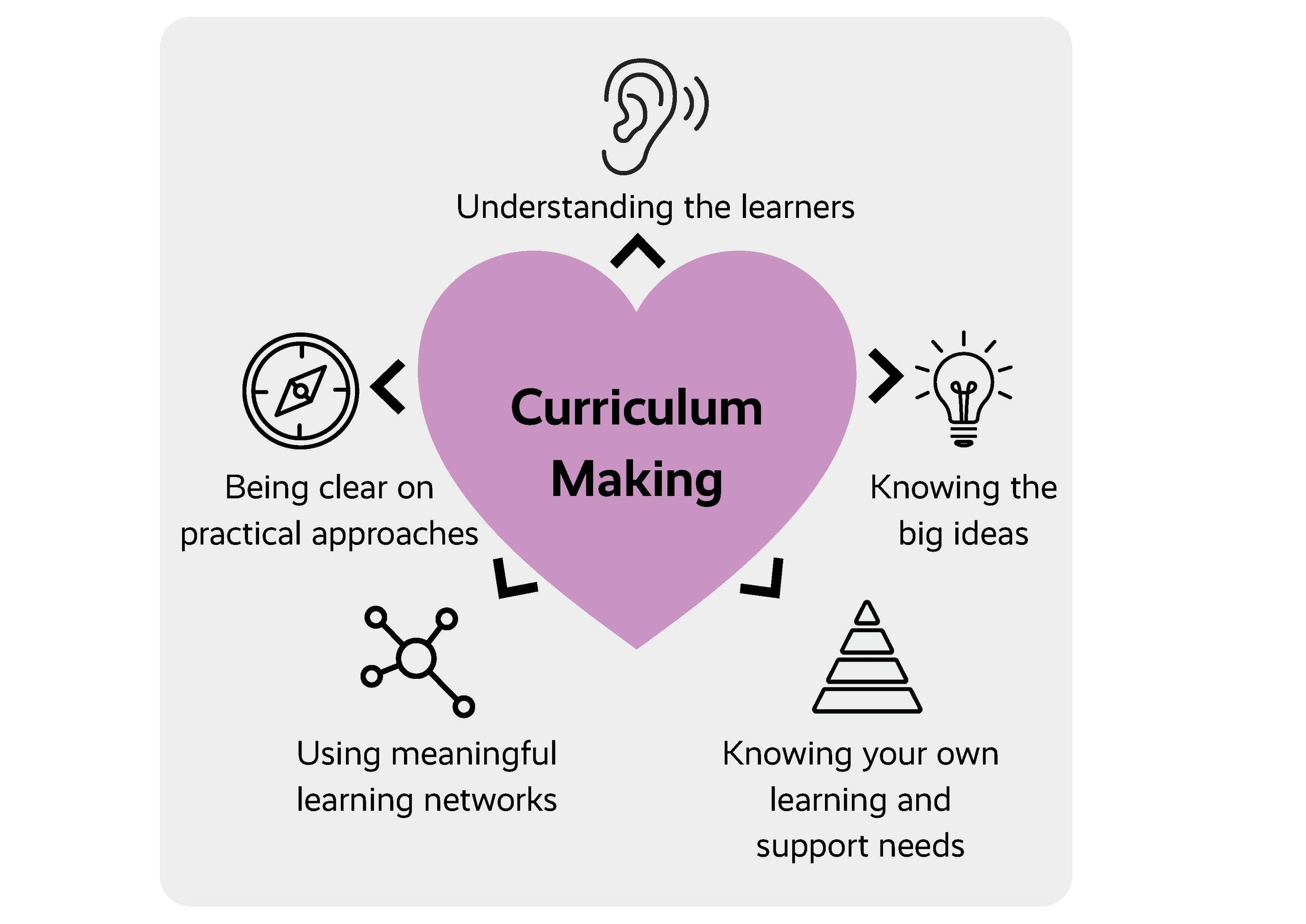
They will support the delivery of the curriculum by:
- Understanding the learners
- Knowing the big ideas
- Knowing their own learning and support needs
- Using meaningful learning networks
- Being clear on practical approaches
What will the improvements mean for young people?
The improvements to the curriculum through the Curriculum Improvement Cycle will ensure you are able to experience the best education, that supports your needs, helps you to develop skills and provides the best opportunities to help you thrive and succeed.
The Curriculum Improvement Cycle lasts for 10 years. Some young people might wonder why something is important if it won’t fully be in place until after you have left school.
Young people told us improvements being made to the curriculum will:
- Help children and young people in the future access the best education they can
- Make a difference to my siblings, friends or family members
- Help any kids I might have in the future
- Make Scotland a better place – young people in the future will be better prepared for life after school. That could be further education/studying or work.
Where/how can you find out more
Download the
Download the Curriculum Improvement Cycle Model in
Find out more about the Curriculum Improvement Cycle and how you might be able to be involved here.
Know Your Rights!
To know your rights around education (UNCRC Articles 28 and 29), having your voice heard about things that matter to you (UNCRC Article 12) and your best interests taken into consideration (UNCRC Article 3) or any other rights you have as set out in the United Nations Convention on The Rights of the Child (UNCRC) click here.
For more information on education and careers head over here!